
In 2021 we as a collective global community were, to put it lightly, going through some shit. Many working class people were forced to leave their jobs while the corporate world scrambled to build a remote work business model. I personally realized that service work and artistic ventures were probably not going to be a safe or economically sustainable option as a mother, wife and caregiver during these ‘unprecedented times’.
So like many others I decided to go back to school, choosing to pursue a diploma in Data Science from Concordia University. I specify diploma as I do not wish to pass off my education as a CS Degree, but I did learn to streamline the usage of certain technological tools and understand larger computational/statistical concepts. As this was one of those infamous tech ‘Bootcamps’ our class received an onslaught of workshops that often used well known training data. One of these many projects was the well known Baby Names exercise.
Computer and Data Scientists alike need good longitudinal data in order to practice, train and innovate certain core techniques. The techniques that are being increasingly used in our daily lives. This particular dataset is a gold mine for timeseries analysis as it dates back to the late 1800’s which can be a rarity in the open data world.
Every year the U.S. Social Security Administration releases a collection of that year’s births and registered names. It has brought to light several trends over the years due to the size, availability and trainability of the data. As a simple example-thanks to this dataset we now know the names “Olivia” and “Liam” have been trending as top US baby names for quite some time.
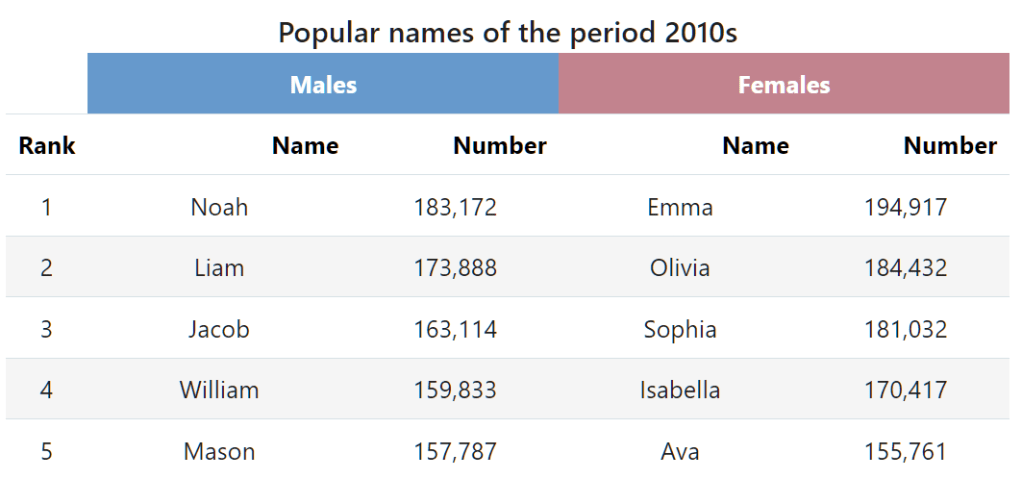
The Social Security Administration provides an easily accessed dashboard that allows the public to interact with trends and naming statistics over the past 100 years.
While fuddling with the data I started playing around with names for fun. As my family and I have pretty ethnic names (for white people) I thought I’d run ours just to see if we existed. My name did not exist in the data. My brother had 6 hits or so while my less oddly named siblings showed standard growth.
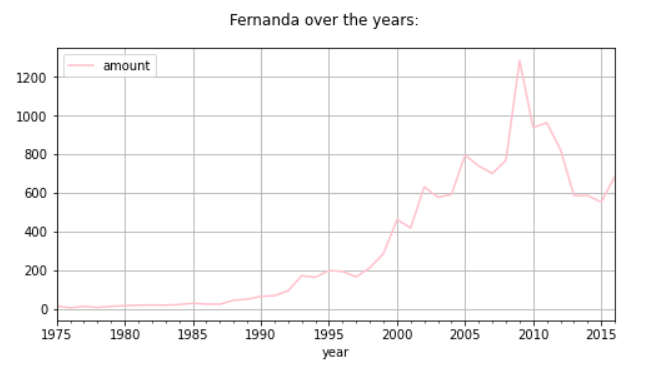
Intrigued by this I started running some other frequently heard names from my childhood until I began seeing a trend. The seeming decline of commonly Hispanic first names. As Latin American surnames have been increasing in the United States over the past several decades this seemed a bit odd.
As a side note moving forward-concerning the current linguistic climate around the Hispanic community- there is great controversy and question as to the correct terminology to refer to the North and South American Spanish speaking diaspora as a whole. As I have done some research over the years both online and 'in the field' I have settled on the most widely acceptable terminology to be 'Hispanic' though, I am only choosing this as a way to describe how a broad community of people are being categorized by government institutions.
Though I was born in Canada first living in a German town as a culturally Irish person (Canada is weird), I spent my formative years in the western United States where I was exposed to Mexican and Indigenous culture on a daily basis. This upbringing is one of my most cherished experiences as these varying cultures are rich with beauty, warmth and complexity as well as having the best sustenance in the game.
I suggest one of my favorite artists of all time, Mexican Institute of Sound as the soundtrack for our exploration-feel free to open that bad boy up in a background tab.
Due to growing up in this environment when my family returned to Canada in 2004, I realized…there were no Mexicans. There wasn’t really a visible Hispanic presence at all at that time. So because of this, I have always been hyper aware of any Spanish speaking communities here in Canada as well as trying to support them as much as possible. I am elated to report numbers are steadily climbing here. Shout out to Kensington Market for being a haven back in the day.
The analyzed data used within the article is openly available on my GitHub should you wish to grab some of the code and play for yourself.
I began by running the data into a notebook and then verified the size and shape. In order to get a broad view I then visualized the growth of births over the available time, which in this case is the late 1880s-2020. Overall the data set shows a strong progression of birth rate in the United States over the decades. A bloody jackpot of information.

I began by searching some recurrent names I’ve noticed among my own peer group like Hunter and Axel. Names you wouldn’t have seen as much 50 years ago. Those with that nouveau millennial flair of confidence.

Like, ain’t nobody naming they kids Axel before 1985. Zero.


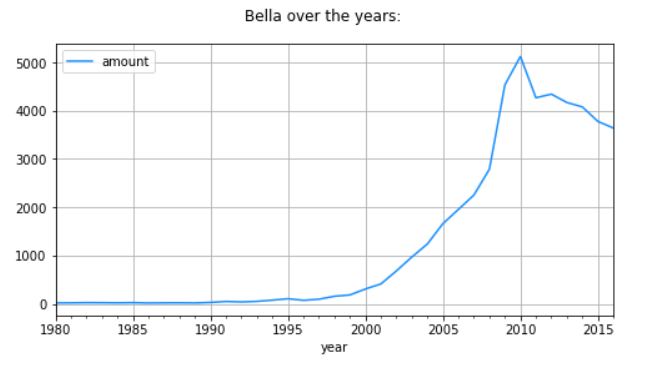
Take the name ‘Bella‘ for example. This name fucking POPPED OFF after 2002 but what could cause an entire population to have such a sharp uptick of a certain name in such a short period? Well, media of course.
‘Bella‘ (for those who have somehow avoided) is the main character of the book/movie series Twilight. The movies went on to collectively gross over 3.3 billion dollars in the box office. It was a huge franchise, so it’s only natural that society would begin to reflect it’s interests regardless of how sparkly those vampires may be.
This led me to wonder, at what other moments in history would we have seen obvious feelings around a single first name like this?
Maybe WW2?
One would think after what went down there’d be no way in hell you’d catch someone naming their kid ‘Adolph’ after that one dude ruined it. If you chose to name your child Adolph after a certain period you would have to be aware of the overall context of that particular name. In society it could no longer be spoken without incurring certain memory or feeling. A real life Voldemort for any Gen Zer that may be reading.
To my lack of surprise, low and behold the data deeply reflected my suspicion. Starting around 1923-25 Americans sharply stopped naming their children Adolph.

Now this wouldn’t be strange if it weren’t for it being a popular birth name prior to this, peaking in the early 1900’s. Germans were deeply established in the United States by the turn of the century, but they still kept up with the mutterland. When the North America we know now was still being formed into the clusterfuck it is today, Federal governments sought to control the type of immigration they allowed in their newly possessed lands.
The U.S. and Canadian (British) governments favored self sufficient agriculturally inclined and melanin challenged communities that could help to till the soil and feed the new colonizers. With many communities of Dutch and German orthodox farmers being given large land parcels, German names and culture began shaping North America. Therefore a name like Adolph prior to 1925 would have been a common, similar to James or Ernest.
If there is an increase in representative population that correlates with the increase of Latin American surnames, why would Latin American first names decrease in popularity? If the surnames and population of the Hispanic community are increasing then shouldn’t that reflect in first names as well? I was a bit confused.
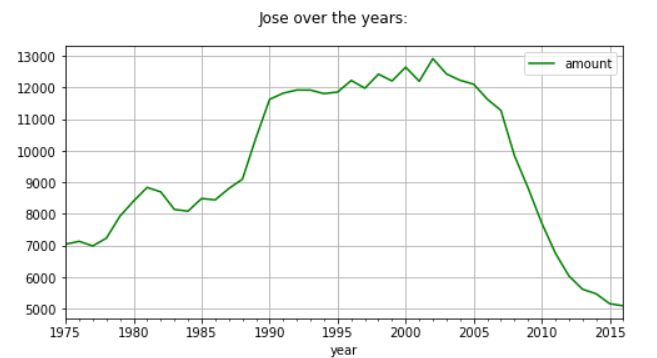
One possibility is the religious undertone of some of the more common names like José or Maria. These names are associated with Mary and Joseph as Latin America has been a historically Catholic Continent. That’s how we all got sugar and coffee.
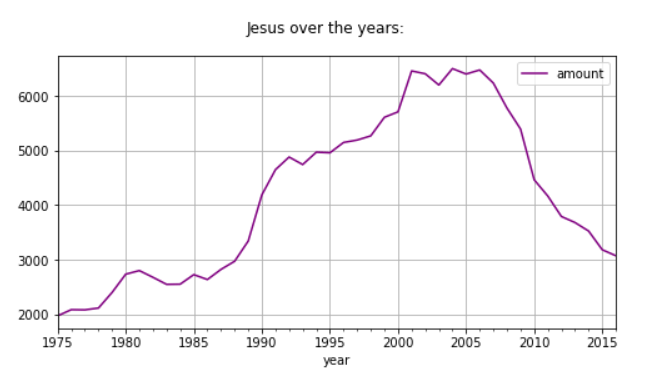
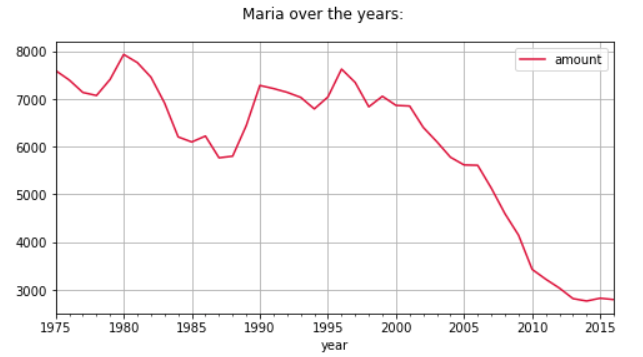
Many young Hispanic people may no longer support the church perhaps due to being more educated and better connected than the previous generations. Slightly less oppressed perhaps. It would be sensical for a more well rounded generation to no longer adhere to previous cultural normativities.
This could account for the loss of certain religious names but what about traditional Spanish names?
Names can often be the first introduction to employment, housing and services.
Much like we saw with the name ‘Adolph’ a societal perception can gravely affect your opportunities and potential safety, especially in the United States.
Many researchers attribute names to being a starting point for racists and discriminators alike. Amazingly (to me) the way they chose to analyze and conduct an audit of community treatment was to search out ‘typically Hispanic’ names within the records to form correlations.
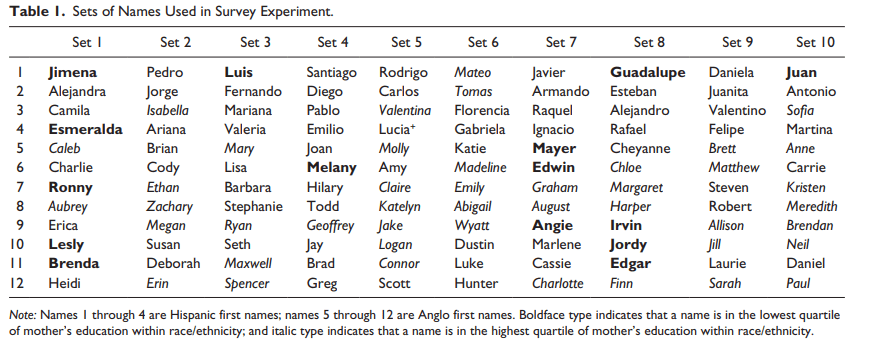
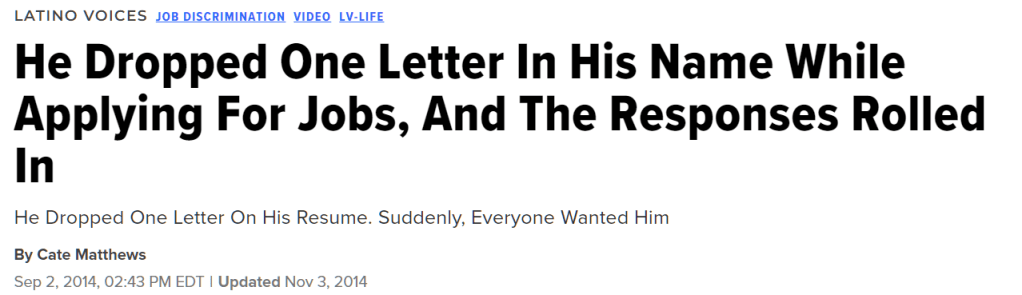
Names have been proven to affect employability as shown time and time again for the Black community as common names like ‘Jamal’ statistically makes one significantly less hirable. Could the same be true for the Hispanic community?
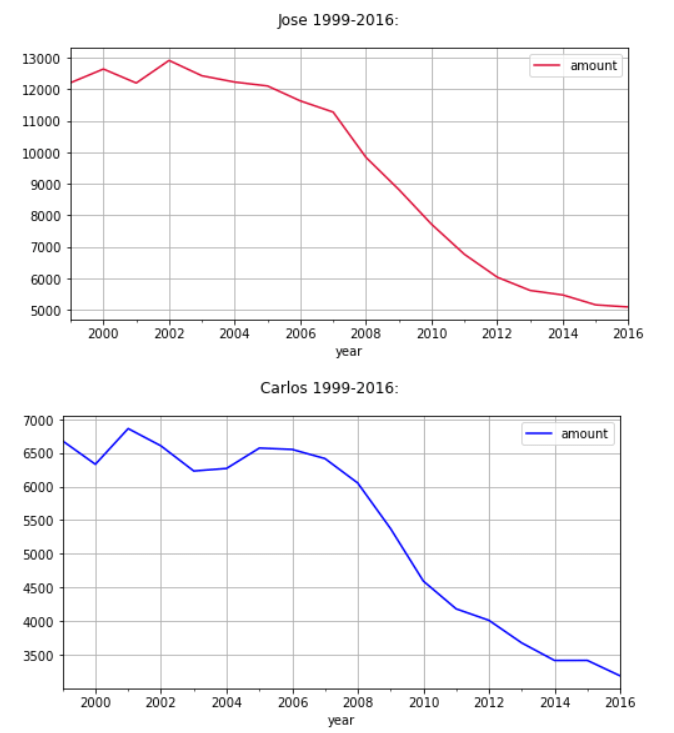
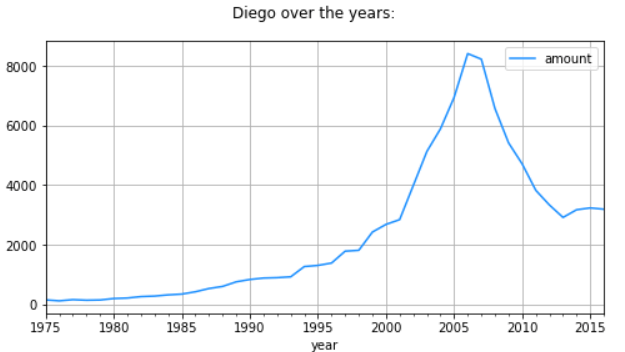
Here it can be seen that the sharp decline begins in 2002 but really picks up after 2005. In most cases the usage of these common names has halved from the early 2000’s and continues to drop. Could this be in reaction to the 2001 passing of the Patriot Act that expanded homeland security allowances?
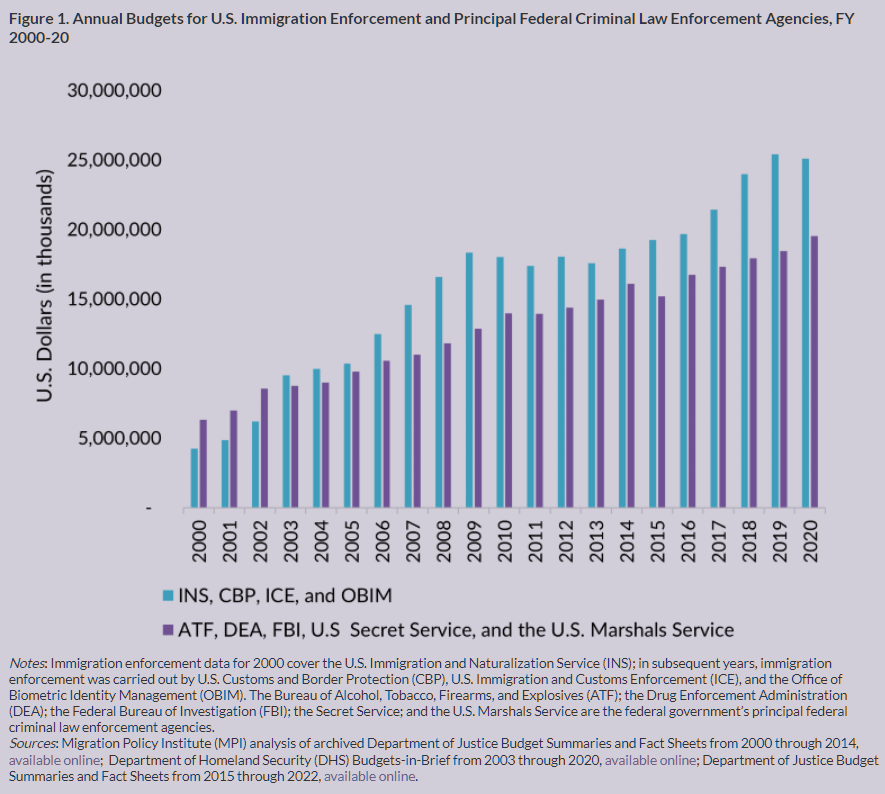
Though essentially any non-citizen can be deported from the U.S. the steadily climbing numbers of those evacuated tends to be certain people from certain places. Places that may be near enough geographically to arrive unannounced at an American border. The budget increases (as seen below) reflects the country’s growing incentive to expand immigration enforcement.
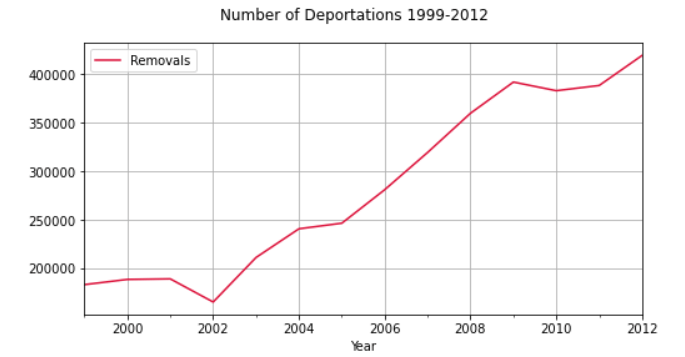
Combing around online I stumbled upon a dataset of U.S. deportation rates from 1975-2012, and while I knew personally of the increase in deportations to see it laid out in the data like this was stark.

We see a major increase of deportations beginning around 1995 with the number of yearly deportations going from an average of about 15-50,000 per year. However when we zoom into these ejections appeared to nearly be declining between 2000-2002 until we see the sharp incline in the start of 2002 (post 911) that has continued to skyrocket to this day.
The sharp decline in Hispanic first names in 2002 occurs at the same point of increased deportations.
Could the Hispanic community be reducing their choice of more traditional names to protect their families? As someone who happened to live in a very Mexican state at the time, you could feel the tension. It was being spoken about on the playground, uncles were disappearing overnight. Are new parents of Hispanic descent choosing not to name their children culturally due to the political climate and fear?
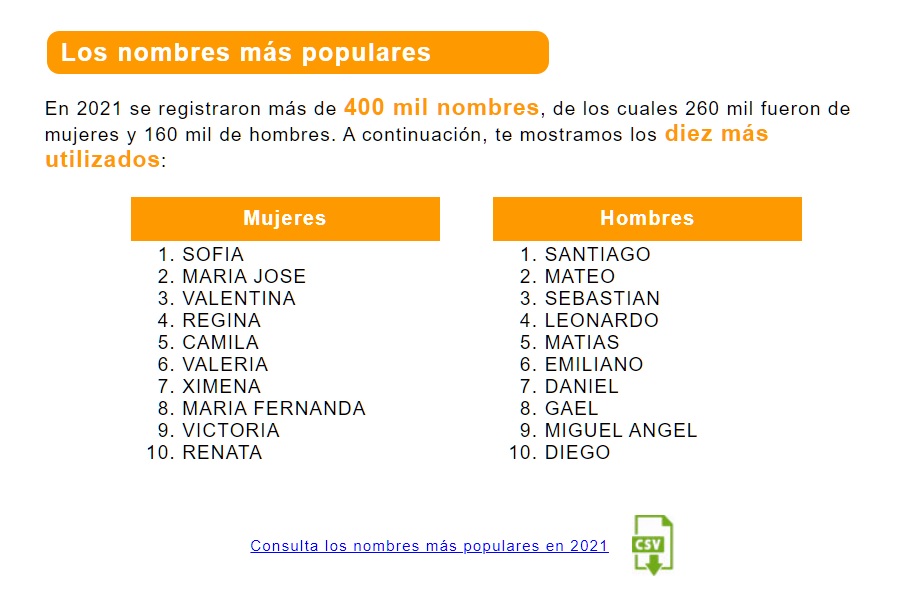
If in Mexico names like Maria and Diego are still topping the list of annual baby names why would ther be such a sharp decline in the U.S. while seeing an increasing population?

Deportations are practically a source of pride for the country as ICE (Immigration and Customs Enforcement) is one of the newest and most funded sectors of U.S. domestic government. According to their own history:
“…in November 2002, Congress passed the Homeland Security Act. The act set into motion the largest government reorganization since lawmakers created the Department of Defense in the 1940s.
In March 2003, the newly created DHS opened its doors. One of its components was the Bureau of Immigration and Customs Enforcement, which is now known as U.S. Immigration and Customs Enforcement.
In response to the 9/11 tragedy, lawmakers gave ICE a unique combination of civil and criminal authorities to protect national security and strengthen public safety. With those authorities, ICE quickly became a powerful and sophisticated federal law enforcement agency.”
As the United States has many Mexican and Indigenous people most are entirely ‘assimilated’ into American society. They read the paper, watched the news, heard stories from their communities. They knew what was coming even though the Department of Homeland Security wasn’t even proposed until June 2002. The deportations started before the DHS was even approved, which only took 6 months to pass in congress.
For people of Mexican descent who make up a large portion of the American population, they had historical reason to worry. There have been so many mass deportations over the years that some of these incidents have even rendered a public state level apology as shown in the “Apology Act for the 1930s Mexican Repatriation Program.” from the state of California.
“In total, it is estimated that two million people of Mexican ancestry were forcibly relocated to Mexico, approximately 1.2 million of whom had been born in the United States, including the State of California.” Over one million Americans were ejected from their home country and often ancestral lands because they ‘fit the profile.’
Given the previous history of mass deportations (and the entire state of Arizona) Mexican Americans would be ill informed if they weren’t at the very least worried.
This made me wonder if my original data would reflect the same trend I was seeing today.
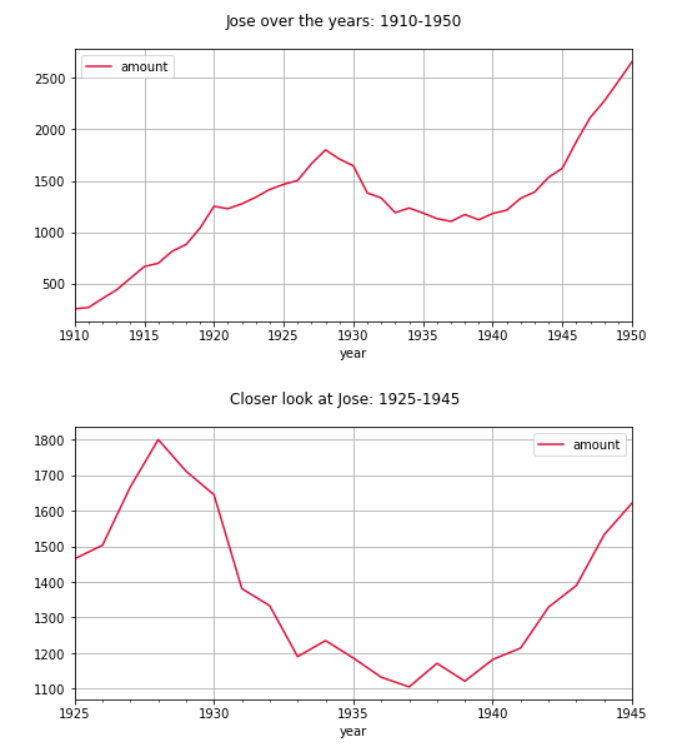
Sadly-it seemed to match as names like José and Jesus drastically declined in birth names starting around 1928 but then seemingly trending upwards as of the 1940s.
I will point out that the number of recorded births at this time are much lower than current numbers however home births were very common at this time and the overall population was much lower than it is today. So while it might not reflect the community as a whole at that time, there is still a decline among the small data we do have.
Though this perhaps could be contributed to other factors such as assimilation into American culture or evolving cultural practices what I find to be interesting is that only during periods of federal threat do you see a decline in these names.
After 1940 the name Jesus not only made a comeback but actually exceeded the previous birth numbers. What would cause a sudden decline for only a decade? I cannot see another reason to wax and wane on cultural names with such quickness. These are not gradual inclines and declines, so why would there be such a sharp incline as well? Did the fear of being culturally represented at the time suddenly dissipate?
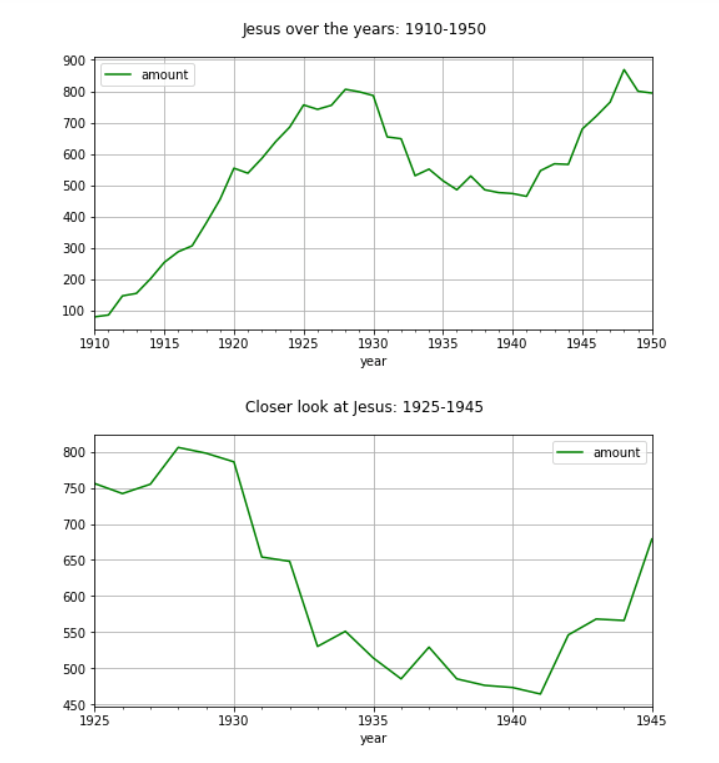
It could be because during WW2 after Hawaii was hit in the attack on Pearl Harbor, suddenly America needed workers. They needed skilled workers in fact, ones who had agricultural experience to fill the worker shortages as America needed soldiers and ran out of farmers.
So in true star spangled fashion they called back the Mexicans they recently expelled to work the farms for subpar wages. Many Mexican Americans then enlisted in the military going on to participate in all facets of war efforts. After the end of the war in 1945 as Mexicans had essentially kept the country afloat, cultural naming trends within the community began to rise again. The American dream.
As the Muslim community is also targeted in the U.S. I wanted to see if there was a similar effect within this community and common naming practices for comparison. Though in the United States any non-Christian name will often encounter difficulties it seems the Islamic community is not stopping their cultural traditions at the same rates in the U.S.
After 911 the common perception was that Islamic and Arabic people were targeted more than other communities, and while it was/is an awful hateful time towards our Muslim friends-the hatred towards the long standing Mexican community did not go away or decrease.
Keep in mind the number of registered births under the following names is much less than the numbers of more traditionally Latin American names seen but an interesting contrast none the less.
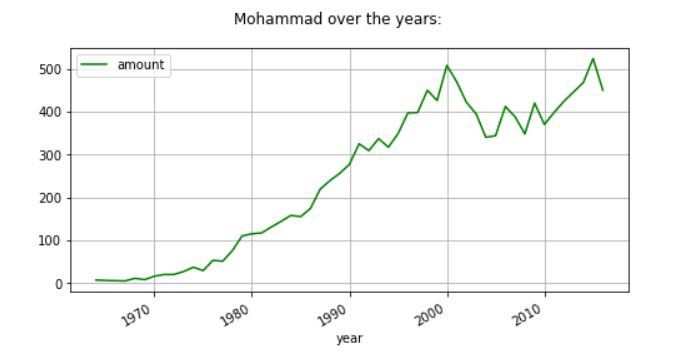
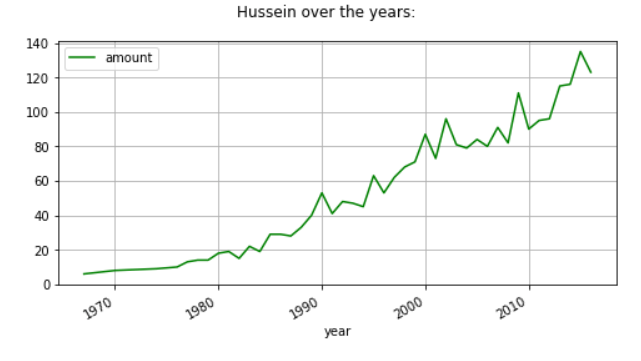
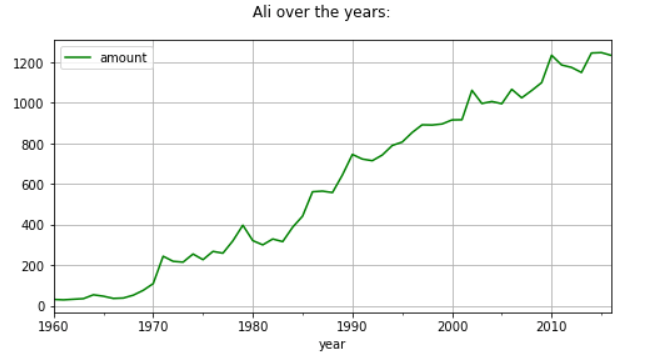
Here again we can see a direct societal effect related to the trending analysis of these Islamic names. Beginning in the 1960’s many people of Islamic faith fled their home countries due to countless wars, persecutions or poverty.
With the reform of the Immigration and Nationality Act of 1965 the United States saw an increase of Arab immigrants as a result of the imposed wars and political and ideological direst. Though the humans who fled these incidents are not monolithic culturally and of various religions I have chosen to use Islamic naming trends as an opposing quantifiable culture within this dataset.
We can see very clearly in the data a slow steady increase in the birthrate of these culturally traditional names, which correlates with the increase in population. We even see a sharp decline for a few years after 2000-which would correlate with the known increase in hate towards the community at that time. Even with these factors the data does not seem as stark as their Hispanic neighbors.
Following my deportation hunch I found direct data from the DHS themselves but I don’t think the trashiness of this data is an accident.

Excel label hell

To be honest this data is egregious. With a nearly 5 billion dollar annual budget, you would think a federal agency funded by the public coffers would provide a slightly better yearly audit or at the very least keep cleaner records.
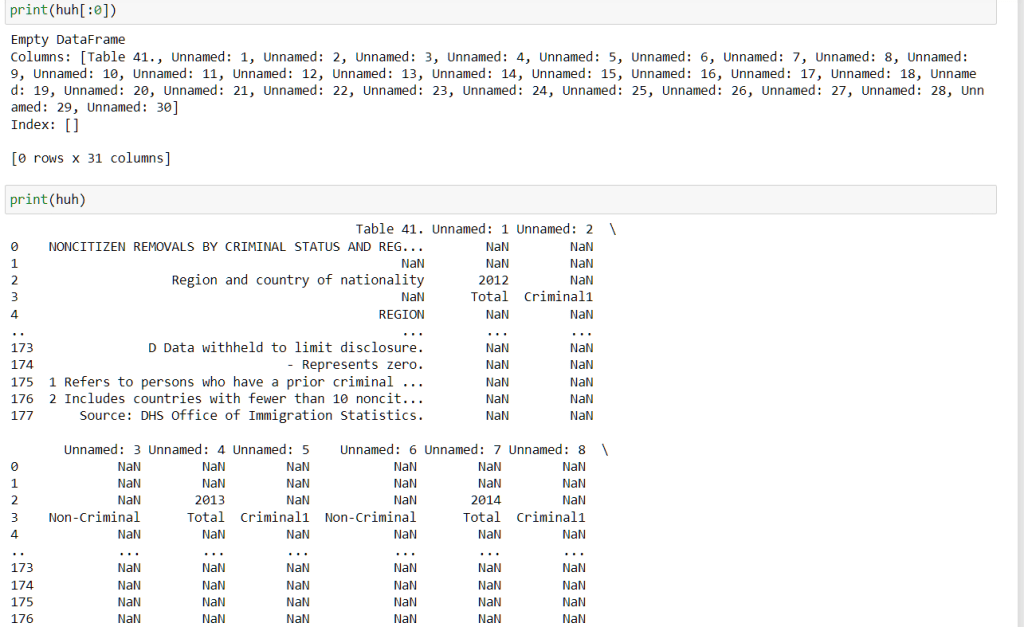
But that’s okay, I found what I was looking for anyway.
We see many countries represented however you don’t need to be a mathematician to see a pattern here.


While using this publicly provided data I started to refer to the presented data in order to verify I was using the correct sets, as again it’s a bloody mess in there. Once I established the correct table to see the deportation or “removal” numbers I was able to refer to both the public statistics and the raw data from which they were derived. Therefore we should see matching numbers with the columns ‘Unnamed: 1’ and ‘Unnamed: 2’ representing “Removals” and “Returns” and ‘Unnamed: 3’ as “Expulsions” .
Seen here are matching figures using the provided DHS data and verified using their public table for the year 2021 in order to verify my methods. So far so good.

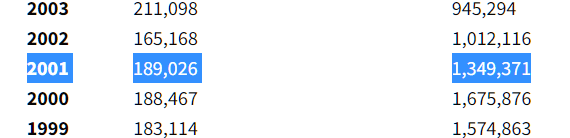
Raw data in Jupyter notebook
Shown here is my raw data up against the publicly available .pdf provided by the DHS. I chose the year 2001 to correlate the DHS data and verify the accuracy of the raw data set versus the presented one. I was happy to see it matched.


Some outlets have claimed deportation rates are lowered in comparison to previous years and if you look at the removals and returns data that would appear to be the case…but what’s about that pesky ‘Expulsion’ column?
Between 2020-2021 there were approximately 1.2 million people expelled from the United States.
Not ‘removed‘ or ‘returned‘…expelled.
The effects of these mass expulsions are already being felt today in a big way, much like the last time we pulled this shit. Currently the state of Florida is in an agricultural crisis as Governor Ron DeSantis signed an anti-immigration bill calling upon the federal powers of Homeland Security to carry out the intended actions of removal and control of mostly Hispanic peoples.
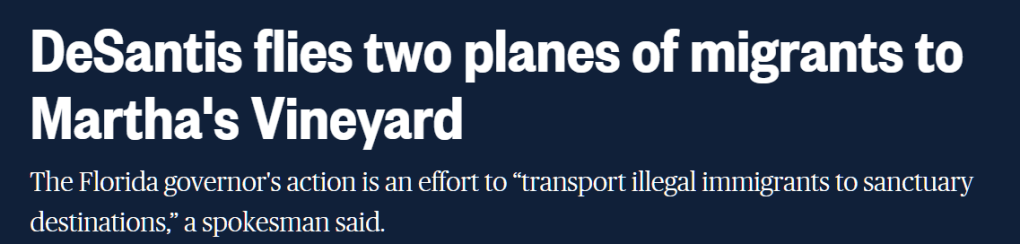
With Trump era policies like title 42 ending that were enacted in temporary capacity during the pandemic, this sudden gap in policy has lead many state level governments to attempt to re-write or evolve their state laws to include immigration measures for those with Mexican borders or internationally facing coastlines. The display of Draconian style enforcement and political propagandizing went as far as to fly asylum seekers to “sanctuary destinations” (states without these policies).
In true historical form just like we saw in the 1940s during the war, we too have realized perhaps we needed some of those people we expelled.
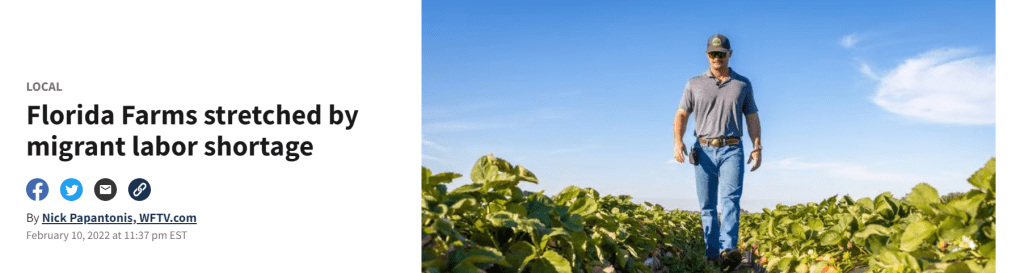
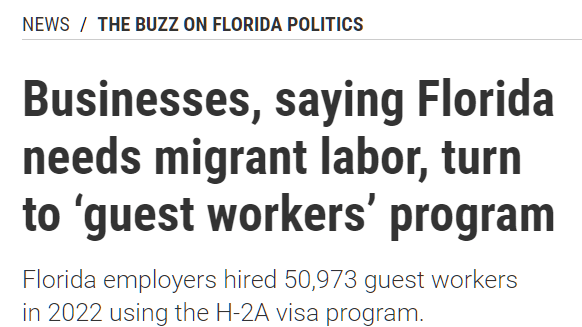
What’s the most terrifying and almost amusing is the overt honesty by local Floridian policy makers towards their intentions and historical knowledge.
GOP Rep. Rick Roth, a third generation farmer, told NPR on Tuesday that state Senate Bill 1718, which goes into effect on July 1, was designed to “scare migrants.” But he admitted that he and his colleagues were unprepared for the destabilization it would cause among the state’s more established immigrant communities.
The blatant targeting and across the board inhumane treatment of the Mexican American and overall Hispanic community has hit a fever pitch. At a time of great global political tension perhaps it wouldn’t be wiser to not bite the hand that feeds? Does the American public have the natural skills to suddenly be able to cope with a sudden food loss? Though it is promising that more households are starting to participate in home or community food gardens it would not be enough to feed over 300 million people.
Beyond the societal loss some of the indigenous keepers of the land are being ‘expelled’ en masse, so rest assured the lack of care and maintenance to the current crops is will be major for everyone. We are blessed as a continent that our Mexican neighbors are still sharing with us at all after all we’ve done to them. Maybe after being treated and essentially conned into some dream they’ll never achieve they’ll stop coming here and put that energy into their own communities. What would happen then?
More over Mexico even after all that’s happened is still willing to fill the gaps of the American systems historically providing healthcare to middle class U.S. citizens. As education is free in Mexico the population is highly literate and skilled in all fields. What we do if they stopped taking care of us?
To discount the strength and historical effect of the Hispanic population maintaining the viability of our entire continent would be at our own peril. My current country of Canada is of no exception as many of our agricultural workers have been brought in from the south for quite some time. Our absolute dependence on the skills and labor of the very same community we expel and discriminate against is a historic irony that one can only hope will crumble. Mexicans may be the most targeted but all people descended from south of the U.S. border are at risk.
Are we doomed to repeat the same mistakes of the past? Will we call back the millions of Hispanic workers we’ve recently expelled as we ‘require’ more resources to aid in foreign military engagements? Will we then ask those same ejected and re-accepted people to serve the institution and fight for freedom? Then will they garner equality on their own lands? Only time will tell what decisions we make, but without empathy and large scale vision we may lose more than we could have ever quantified.
I would like to dedicate this endeavor to Cesar Chavez, the Zapatists, Frida Kahlo, Cypress Hill and the entirety of the Hispanic community for your warmth and teachings throughout my life and in the future.
Viva La Raza
 Hoodrat Anthropology